Wyoming is considering a felony penalty for online sweepstakes games, highlighting regulatory challenges amid rising gaming activity and industry pushback.
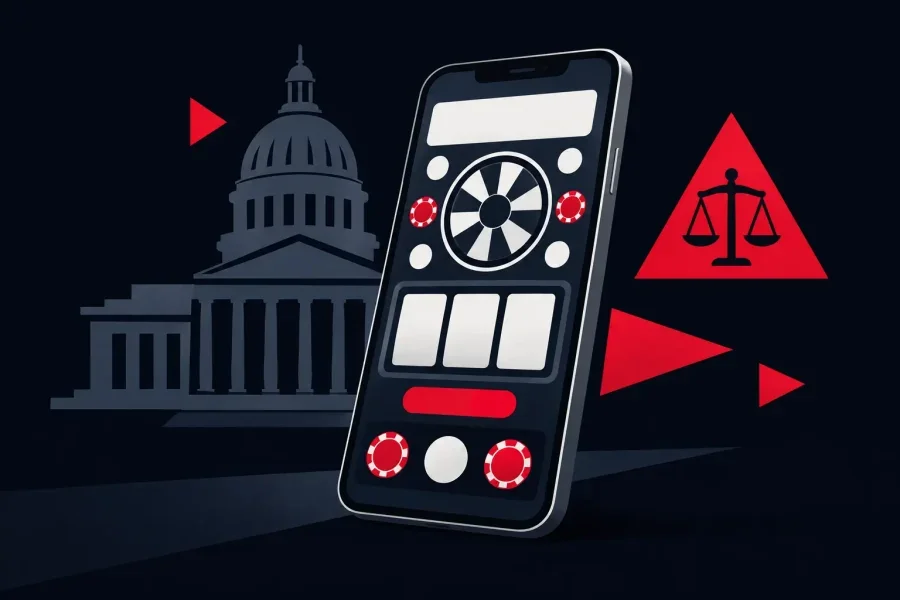
Wyoming’s Select Committee on Gaming has put forward a draft bill that seeks to ban online sweepstakes games, classifying them as a felony offense. While the legislation has garnered unanimous support from the committee, it has yet to be enacted into law. This proposal aims to clarify a murky area for state regulators while signaling to operators that such games could soon be deemed illegal gambling.
Addressing Ambiguity in Online Gaming
The focus of this committee proposal is primarily on online sweepstakes games where prizes are determined by chance. Current state regulations prohibit online casinos, yet allow online sports betting and fantasy sports. This leaves sweepstakes games in a gray area within Wyoming's legal framework.
This ambiguity has led to jurisdictional challenges. When consumer complaints arise regarding these games, the Consumer Protection and Antitrust Unit may consider them as gambling and refer them to the Wyoming Gaming Commission. However, the commission might return the complaints, arguing they fall under consumer protection rather than gambling regulations. The new ban would aim to eliminate this confusion, providing a clear directive that could impose felony liability on operators.
Wyoming’s decision is part of a larger discussion nationwide about the status of online casino-style offerings and how they fit into existing laws. Such distinctions are essential for enhancing online casino gaming frameworks, where legislators and regulators must establish which products are permissible and the conditions under which they can operate.
Concerns from Industry Experts
Industry attorney Bill Gantz, who represents sweepstakes gaming firm VGW, voiced opposition to the proposed legislation, asserting that it may overreach and conflict with existing practices regarding sweepstakes linked to purchases. Federal law mandates that such sweepstakes offer an alternative entry method, which permits participation without a purchase. Gantz emphasized that VGW has provided online sweepstakes games legally in Wyoming since 2012.
While these games may bear a resemblance to online casinos by design, they are treated differently under state law. Unlike online casinos that deal in real money and cash prizes, sweepstakes games are classified as free-to-play promotional tools under the state’s Consumer Protection Act. This distinction, however, can become obscured, as noted by Affie Ellis, an attorney for Bally’s Corporation, who pointed out that the visual similarities can lead to confusion.
The dispute centers on how this draft affects the allowance of free-entry promotional models, questioning whether such games could inadvertently breach the state’s gambling regulations. Enforcement decisions made in other states, such as Arizona’s recent actions against online gambling operators, also heighten the concern for operators regarding their ability to engage with residents.
Increased Wagering Activity and Regulatory Needs
The deliberation over this new measure comes as Wyoming experiences a surge in gambling activities. Nicholas Larramendy, executive director of the Wyoming Gaming Commission, reported that nearly $2.7 billion was wagered throughout the state across various forms of legalized gambling over the past year, with projections suggesting that 2026 could see that number exceed $3 billion.
In 2025, the legislature formed the Select Committee on Gaming to address evolving gaming issues. The draft proposal regarding sweepstakes adds a complex layer to their ongoing work, raising questions about which authority would be responsible for managing complaints related to products that merge promotional mechanics with casino-like gameplay. The effects of any state-level rule changes can also have significant implications for businesses, as illustrated by ongoing legal disputes relating to online casino regulations in Maine.
While the committee's backing propels the draft forward, actual implementation of the proposed felony ban will require further legislative action. Until then, operators and regulators will have to navigate the uncertainty surrounding the bill's progression and the pending clarity on which agency would oversee relevant complaints.
Discussion
Sign in to join the discussion.