The CFTC's recent measures to define sports event contracts spark debate as Nevada advocates for state control over what resembles traditional betting.
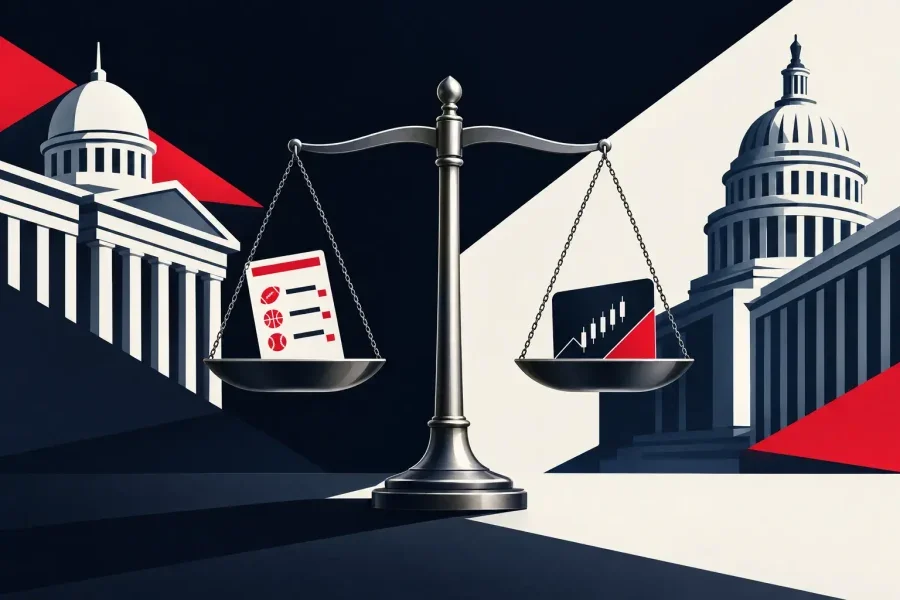
Challenges are emerging at the intersection of federal and state oversight of sports-event contracts, as the Commodity Futures Trading Commission (CFTC) moves to redefine the parameters of what constitutes a swap. During an Indian Gaming Association webinar, Nevada Gaming Control Board Chairman Mike Dreitzer addressed these issues, emphasizing the ongoing tension between state and federal regulators over authority in this arena. This friction isn’t just bureaucratic; it affects how businesses operate and how consumers engage in betting.
Federal Expansion of Swap Definitions
The CFTC has introduced a proposed rule that could significantly broaden the federal definition of swaps to encompass event contracts tied to sports, weather, politics, and culture. This move suggests that the CFTC sees more potential in these contracts than in traditional wagers on sporting events. At the same time, an interim final rule confirmed that casino-style betting products, including wagers made in sportsbooks, would fall outside this expanded definition. This division creates an important demarcation, separating event contracts from traditional gambling constructs and raising questions about the nature of risk and speculation.
Such regulatory measures underscore a pivotal debate about where event contracts sit within the federal oversight framework. Analysts have raised significant concerns, as highlighted in various discussions around the CFTC's outlined prediction-market framework. Essentially, the CFTC is attempting to strike a balance between fostering market innovation and preventing malpractices associated with betting activities. The challenge lies in ensuring that definitions don’t stifle new forms of consumer engagement, especially as technology evolves.
Disagreement on the Nature of Event Contracts
Dreitzer contends that sports-event contracts and standard sportsbook wagers are fundamentally similar. He draws an analogy comparing a $10 bet on the New York Giants to a $10 contract related to a specific sports event. His argument hinges on the assertion that the CFTC's distinctions fail to capture the practical realities of these products, which often serve the same purpose for consumers: engaging in speculative transactions centered around events. This isn’t just a legal technicality; it reflects how players in this space perceive their choices.
His viewpoint critiques the notion that prediction markets differ because of their peer-to-peer structure. He emphasizes that traditional sportsbooks often provide cash-out options, blurring the lines between standard betting and event contracts. It's a complex relationship that speaks volumes about consumer behavior and preferences, and one that regulators might not fully grasp. As a veteran of Gaming Arts and Ainsworth Game Technology, Dreitzer's insights exemplify Nevada’s proactive stance that when sporting contracts operate similarly to conventional bets, they should come under state gambling oversight. This perspective is central to ongoing discussions about Nevada's scrutiny of prediction markets, indicating a broader struggle for states looking to maintain their regulatory authority in an era of fast-moving market dynamics.
The Future of the Regulatory Divide
The CFTC's proposed measures are setting a new regulatory framework, suggesting that while certain event contracts may qualify as swaps, products typical of casinos will be excluded. This differentiation is crucial; however, Dreitzer maintains that the Nevada regulatory body does not accept federal classifications as definitive in resolving state-level gambling regulatory concerns. The ongoing tug-of-war between state and federal authorities is a defining issue that isn't likely to resolve anytime soon.
For companies like Kalshi, these developments carry significant implications. They're tethered to state gambling statutes, which can introduce tax obligations and compliance costs that aren't ideal for businesses looking for operational clarity. The recent request for a rehearing reflects a collective desire from stakeholders to clarify these ambiguities, even as the existing court ruling remains in place. The CFTC's rules on federal classifications of these contracts are a focal point for industries navigating complex regulatory environments. You'll have to keep an eye out for updates, as there's not yet a timeline or deadline from the CFTC for final rulings, leaving both state regulators and industry players on edge.
Implications for the Betting Industry
The ongoing developments in this regulatory saga have far-reaching implications for the betting industry as a whole. If federal definitions expand, it could reshape the landscape of not just sports betting, but also the entire market for event contracts. What this means for you is that state regulators may face increased pressure to adapt their frameworks in response, leading to potential inconsistencies across state lines.
And this is the part most people overlook: how these changes affect consumer behavior. As the distinctions become muddied between various forms of betting and event contracts, consumers might find themselves drawn into new markets without fully understanding the regulatory environment governing them. If you're working in this space, you need to pay attention to how consumers react to these fading lines, as their preferences could drive significant changes in market dynamics. The betting landscape is not just a patchwork of regulations; it's a reflection of how society perceives risk, reward, and entertainment in the age of instant information.
Discussion
Sign in to join the discussion.