Discover exciting advancements in CSS, including the sibling-index() function for animations, the infinity keyword, and the latest container queries.
The landscape of CSS continues to evolve, revealing new functionalities that enhance web design and development. The upcoming release of the sibling-index() function in Firefox, set for August 18, 2026, is paving the way for innovative animations, as illustrated by Temani Afif’s recent work showcasing its potential. This function could alter how developers approach animations fundamentally, moving beyond traditional methods to craft more dynamic and context-sensitive interactions.
Sibling Index Animation Techniques
Temani Afif’s insights build on Chris Coyier’s In-N-Out Animations series, demonstrating visually engaging applications of the sibling-index() function. Animations have long been a staple in enhancing user experience and engagement; however, the ability to manipulate sibling relationships offers substantial creative leverage. By using this function, developers won't just create static transitions; instead, they'll introduce a more fluid interaction model where animations can react contextually to the current state of sibling elements.
For instance, the ability to accurately pinpoint a sibling's index opens the door for animations that can adapt based on user interactions or changes in the DOM. This means that if you're working in this space, you can create interfaces that feel alive and responsive, rather than static or predictable. Thus, the implications of this function go beyond mere aesthetics; they touch the core of modern web interactions.
Designing a Knockout Bracket
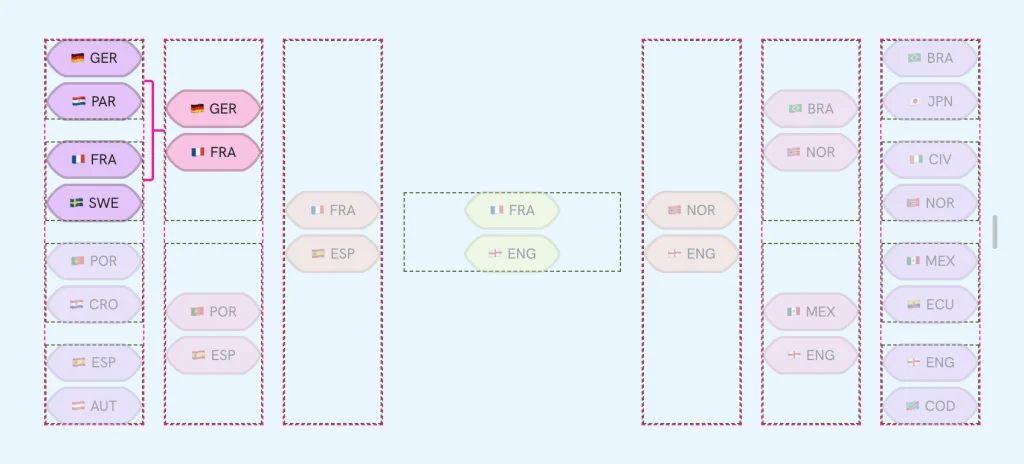
For those reminiscing about the thrilling 2026 FIFA World Cup, Ahmad Shadeed provides an engaging guide on creating a knockout bracket with CSS. This piece not only captures the excitement of the tournament but also serves as a practical resource for developers looking to implement similar features. In an age where sports events heavily influence web design trends, the ability to create visually striking brackets can significantly enhance a site’s aesthetic appeal and user engagement.
However, this guide does more than just lay out a design template. It also speaks to the cultural significance of sports design, demonstrating how developers can encapsulate a sense of occasion within their work. This could encourage greater user interaction, particularly during high-profile events where fans often seek detailed layouts. Such features may appear simple on the surface, but they create a richer user experience by tapping into communal excitement and loyalty.
Infinity Keyword Use Cases
The newly introduced infinity keyword in the calc() method opens intriguing possibilities. Adam Argyle delves into the various applications of this keyword, enlightening developers on its utility beyond initial assumptions. Traditionally, CSS design has grappled with fixed dimensions; however, this keyword introduces flexibility that could redefine layout capabilities. By enabling developers to create responsive designs that stretch and change dynamically, it challenges the norms of conventional styling techniques.
To visualize, corner-shape: superellipse(infinity); yields sharp corners that maintain a visually squared-off appearance, while corner-shape: superellipse(-infinity); produces notched edges—innovative designs that allow for creative freedom. Imagining these options expands the possibilities available to developers looking for unique styles that still function well across various platforms. In a market saturated with cookie-cutter templates, such innovations can give brands a distinctive edge.
Introduction to Container Stuck Queries
In the realm of container queries, Chris Coyier explores how to detect when an element becomes 'stuck' using the @container scroll-state(stuck: <keyword>) syntax. Though not yet widely supported in browsers like Safari and Firefox, this feature signifies a noteworthy shift in how developers will approach responsive design. The notion of detecting whether an element is sticky could lead to more context-aware web pages that adapt fluidly to how a user interacts with them.
This is significant because it aligns with the growing trend of advancing user-centric design. Currently, the capabilities for such precise control in responsive design are limited, often requiring cumbersome workarounds. With the potential to apply styles based on the sticky state of an element, designers could offer a more refined experience that reacts dynamically based on user behavior rather than relying solely on pre-defined breakpoints.
Recent Web Platform Updates
- Firefox 153
- Improvements in interoperability
- Picture-in-Picture API is now a Baseline feature
- Chrome 151
<usermedia>, though lacking support in Safari and Firefox- Significant interoperability fixes
The future looks intriguing as Chrome's roadmap outlines updates scheduled for the next 14 years, potentially leading to What’s !important #354. This long-term perspective indicates that major browsers are committed to enhancing their engines and features, which, in the long run, could empower developers to create richer, more interactive web experiences with greater ease. And yet, until full support for these features is achieved across all major browsers, the implementation of innovative design will remain piecemeal at best.
The Significance of CSS Evolutions
The introduction of functions like sibling-index(), infinity, and features like container-stuck queries signals a larger trend within web development. Developers are looking for less rigid, more adaptive tools that allow for a fluid response to user behavior. What this means for you as a developer is not just an opportunity to enhance your skill set but also a chance to rethink how you approach problem-solving in web design.
Consider this: a CSS function that can change elements based on their sibling relationships means more than just a new coding technique. It reflects a shift in the mindset toward creating user interfaces that respond actively to user input rather than simply displaying content. As these features become more integrated into the development workflow, they may inspire a generation of designs that feel less templated and more personalized.
The implications stretch further into the realm of web standards as well. Browser vendors will need to collaborate more closely to ensure these features are supported universally, enhancing the overall web experience. As developers embrace these changes, the drive towards more expressive and intelligent design practices could lead to a renaissance in UI/UX principles, grounded in both functionality and user engagement.
Discussion
Sign in to join the discussion.