Kalshi's CEO criticizes New York for rejecting a tax proposal that could generate $10 billion, as regulatory tensions escalate over the prediction market.
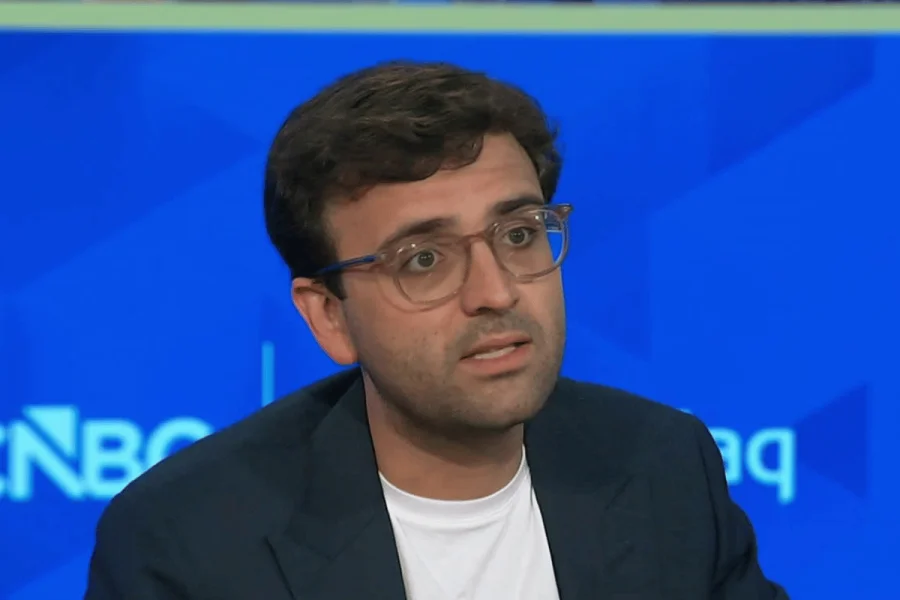
Kalshi CEO Tarek Mansour is intensifying his company’s dispute with New York officials after they dismissed a tax proposal he estimates could yield nearly $10 billion over five years. In an appearance on CNBC’s Squawk Box, Mansour asserted that the prediction market platform sought to alleviate concerns surrounding tax revenue and consumer protections, rather than exiting New York.
Context of the Proposal
Kalshi’s proposal, which Mansour claims could generate significant tax revenue, is positioned at the intersection of regulatory reform and an emerging financial market. By proposing a tax structure specifically targeting prediction markets, Kalshi is attempting to carve out a legitimate niche within both state and federal regulations. Such markets allow users to speculate on outcomes of various events, from political elections to economic indicators, creating a marketplace that theoretically can bring substantial financial returns to both participants and the state in the form of tax revenues.
“We put forward a proposal to the governor, suggesting the implementation of tax structures on the prediction market industry,” Mansour stated during the interview, as shared in a transcript. He added that this initiative could potentially raise “close to $10 billion in the next five years.” While these figures have not been independently verified, Mansour believes such revenue could significantly impact funding for education and healthcare in the state. The importance of that $10 billion is not just round numbers; it reflects an entire potential budget for numerous vital state programs. If you're working in this space, understanding the implications of this revenue could be key to navigating similar debates.
State's Firm Stance
Governor Kathy Hochul has made it clear that tax revenue estimations won't alter the state’s stance on Kalshi. In a pointed response, she stated, “Kalshi can promise 100% of its revenue. You can’t buy yourself an exemption from New York law. If an illegal bookie offers the state a share of their profits, we’ll still shut them down.” Hochul’s remarks reflect the ongoing tension between fostering new economic opportunities in the state and upholding stringent regulations designed to protect consumers from unregulated gambling.
This firm stand by the New York state government highlights an age-old regulatory challenge: how to balance the desire for innovation in financial markets with the necessity for consumer protection. Hochul's attitude encapsulates the skepticism many regulators have towards new financial instruments that blur the lines between gambling and legitimate investing. It's a hard line to walk, and Hochul's administration isn't willing to wobble.
The state’s legal waters have grown murky for Kalshi after New York filed a lawsuit against the platform on July 31, alleging that it is operating an unregistered gambling business. The state is aiming to halt Kalshi's activities in New York and is seeking penalties and financial restitution. This legal maneuvering is more than just procedural; it sets a precedent for how similar platforms will be treated in the future, making it a critical case to watch.
Federal Oversight vs. State Regulations
Kalshi maintains that its event contracts are federally regulated financial derivatives that fall under the jurisdiction of the Commodity Futures Trading Commission (CFTC). By taking this stance, the company attempts to distance itself from traditional gambling laws, which are often seen as archaic in comparison to modern financial regulations. Notably, the CFTC has backed Kalshi by suing New York, insisting on federal authority over such contracts. This raises questions about the scope of state power in regulating new and emerging financial technologies.
During the same interview, Mansour pointed out that users in New York are reportedly making significant profits on the platform. He asserted, “They made $200 million, plus another $200 million.” This dynamic underscores a broader conversation about the potential of prediction markets for individual investors, while also challenging the state’s narrative about gambling and its implications. He juxtaposed these earnings against sportsbook customers who have experienced similar losses of around $200 million during the same timeframe—figures that remain unverified, but represent a potential area for deeper analysis on market efficiency and consumer behavior.
Defending prediction markets against accusations of potential manipulation by affluent traders, Mansour suggested that other participants would prefer to trade against distorted market prices effectively. He referred to a Washington Post analysis that indicated the outcomes of political market predictions, while informative, should not be treated as absolute certainties. Here’s the thing: the implications of market accuracy could reverberate through investor confidence in such platforms.
Regulatory Conflict and Industry Parallels
The overarching issue at play is one of regulatory authority. Kalshi argues that federal oversight prohibits states from categorizing its contracts as illegal gambling, while New York contends that federal registration cannot exempt companies from complying with state gambling laws. This regulatory tug-of-war is reminiscent of challenges faced by other disruptive companies, such as Uber and Airbnb, which ventured into areas heavily regulated by state laws only to be met with stiff opposition. Accountability to protect consumers is paramount, but so is innovation; there’s a fine balancing act here that can’t be ignored.
In a significant development on July 7, U.S. District Judge Analisa Torres denied Kalshi's request for a preliminary injunction against New York’s enforcement actions. This backlash prompted Hochul and Attorney General Letitia James to emphasize, “New York’s gambling laws are designed to protect consumers. Kalshi tried to ignore them.” With this ruling, the court has essentially told Kalshi that the road ahead will be challenging, further complicating its plans to operate in the state.
Mansour has likened Kalshi’s struggle with New York to historical conflicts faced by companies such as Uber and Airbnb. He expresses a willingness to negotiate on consumer protection measures and reasonable taxes instead of opting to leave the state altogether. This highlights an essential point: negotiation and collaboration can often yield more significant outcomes than confrontation.
Implications for the Prediction Market Industry
The implications of this entire dispute extend beyond Kalshi and New York. If Kalshi manages to establish its model as a legitimate regulated marketplace, it may open doors for other similar platforms looking to enter not just New York, but other states as well. Alternatively, if New York's regulatory framework prevails, it could impose limitations on the growth of the prediction market industry nationwide. Understanding these dynamics is vital for startups hoping to introduce new financial products. More than just a legal battle, this situation is about defining the future of financial trading in America.
This conflict in regulatory jurisdictions serves as a test case for the intersection of finance, technology, and legislation. If Kalshi fails in court, it’ll send a strong message to other startups: the fight for regulatory clarity is often just as important as the innovation itself. (And this is the part most people overlook.)
Featured image: CNBC
The post Kalshi CEO says New York rejected $10B tax proposal amid crackdown appeared first on ReadWrite.
Discussion
Sign in to join the discussion.