A federal judge in Connecticut has denied Kalshi’s request to pause state gambling enforcement during its appeal, favoring Connecticut's regulatory authority.
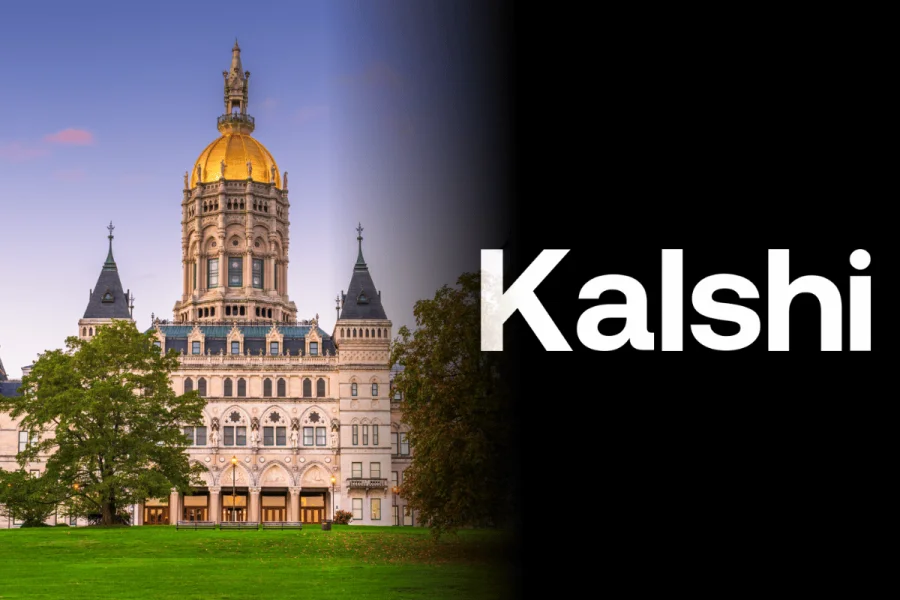
A recent ruling by U.S. District Judge Vernon D. Oliver in Connecticut has affirmed the state’s right to enforce its gambling laws against prediction-market operator Kalshi while the company pursues an appeal. This decision, delivered on August 15, follows Kalshi's emergency request for an injunction that was rebuffed along with a secondary plea for temporary relief. The ruling highlights a critical intersection of state and federal authority in the realm of gambling regulations, underscoring the complexities that businesses in this space can encounter.
Judicial Context and Implications
This order comes after Judge Oliver's earlier ruling on August 10, when he declined Kalshi's bid for a preliminary injunction against the state's Department of Consumer Protection. In Oliver's assessment, Kalshi's sports-event contracts do not fall within the definition of “swaps” outlined in the Commodity Exchange Act, placing them outside the jurisdiction of the Commodity Futures Trading Commission (CFTC). His ruling also emphasized that federal law does not override Connecticut's established authority to regulate sports betting activities. This perspective aligns with a broader narrative where states increasingly assert their regulatory power in areas traditionally governed by federal statutes.
Kalshi’s Challenge Intensifies with Appeal
The stakes have grown for Kalshi as the criteria for obtaining an injunction during an appeal demand a stronger demonstration of likely success than those required for preliminary relief. Initially, Judge Oliver found that Kalshi had failed to meet this more stringent requirement. This raises an important concern: if Kalshi's interpretation of its operations diverges so markedly from existing legal frameworks, how might similar upstart companies navigate their futures in this regulated environment?
Kalshi contested Oliver’s interpretations regarding swaps and federal preemption, suggesting that the Second Circuit might render a different verdict. However, Oliver noted that a potential disagreement from the appeals court does not automatically justify the need for injunctive relief. "The mere possibility for reversal… does not warrant the extraordinary measure of injunctive relief,” he stated. Here’s the thing: Kalshi's reliance on potential appellate outcomes speaks to a strategy that assumes the courts will be more permissive than regulatory bodies. Such assumptions can be risky, especially given the current political climate surrounding gambling.
He further elaborated that variations in legal interpretations from other circuits did not merit such relief, underscoring that differing opinions in other jurisdictions do not create a compelling argument for halting Connecticut's enforcement obligations. This sets a difficult precedent; if the court recognizes state authority over local businesses, you can expect other states to follow suit with stricter regulations of their own.
Understanding the Regulatory Framework
In the backdrop of this legal tussle, the CFTC’s guidance issued shortly after New York’s attorney general filed a lawsuit against Kalshi for its event contracts declared a “market emergency.” The CFTC directed Kalshi to continue its operations despite potential judicial interventions from New York courts. Still, Oliver indicated that this guidance did not change his earlier ruling on jurisdictional matters concerning the CFTC. This raises questions about the effectiveness of CFTC's guidance amid conflicting state interests—an ongoing tension that prediction markets must navigate carefully.
Kalshi also raised concerns about potential civil or criminal liabilities stemming from Connecticut's regulatory enforcement. However, Judge Oliver deemed these allegations unpersuasive, characterizing the risks as speculative and failing to sufficiently support the need to restrict state enforcement measures during the appeal. “Kalshi has not provided a sufficiently compelling basis to further restrict Connecticut’s enforcement of its gambling regulatory regime,” Oliver ruled, demonstrating a clear alignment with the state's regulations over Kalshi’s operations. This ruling serves as a cautionary tale for startups: courts may favor established legal frameworks over innovative business models.
The Roots of the Conflict
The conflict traces back to Kalshi's expansion into sports contracts in early January 2025, which have since represented a significant portion of its business, yielding about 80% to 90% of its contracts and revenues by February 2026. During this period, the company was valued around $11 billion, a figure that symbolizes both potential and vulnerability in a heavily regulated domain. If you're working in this space, this is a wake-up call: growth can quickly become a liability if local laws aren't adhered to.
Connecticut's regulatory stance became evident with a cease-and-desist letter sent to Kalshi in December 2025, in which Commissioner Bryan T. Cafferelli pointed out that unlicensed entities are prohibited from offering sports wagering in the state. He reinforced that even licensed entities face numerous other state law violations in offering these contracts. This regulatory clarity may be uncomfortable for Kalshi, but it's a significant part of establishing norms in a sector that often finds itself testing the limits of legality.
Looking Ahead: What’s Next for Kalshi and Prediction Markets?
Ultimately, Oliver's ruling emphasized that both public interest and fairness principles did not support the halting of enforcement actions against Kalshi. Meanwhile, Governor Ned Lamont's proposed Bill No. 5038, intended to introduce additional requirements for prediction markets, has failed to advance in the legislative process. The lack of progress on new legislation suggests that the regulatory environment will remain static for the foreseeable future. For Kalshi and its peers, this means they will have to innovate within a tightly controlled setting.
As this situation evolves, the implications could ripple across the prediction market industry. Increased scrutiny and localized legal challenges may prompt other companies to reconsider their strategies and product offerings. The stakes are high, and those navigating the intricacies of gambling regulations must proceed with both caution and creativity. (And this is the part most people overlook.) The balance between innovative business models and compliance with state laws remains precarious.
Featured image: Kalshi / Canva
Discussion
Sign in to join the discussion.