Anand Shah resigns from his council position after admitting involvement in illegal gambling, concluding nearly ten years of public service.
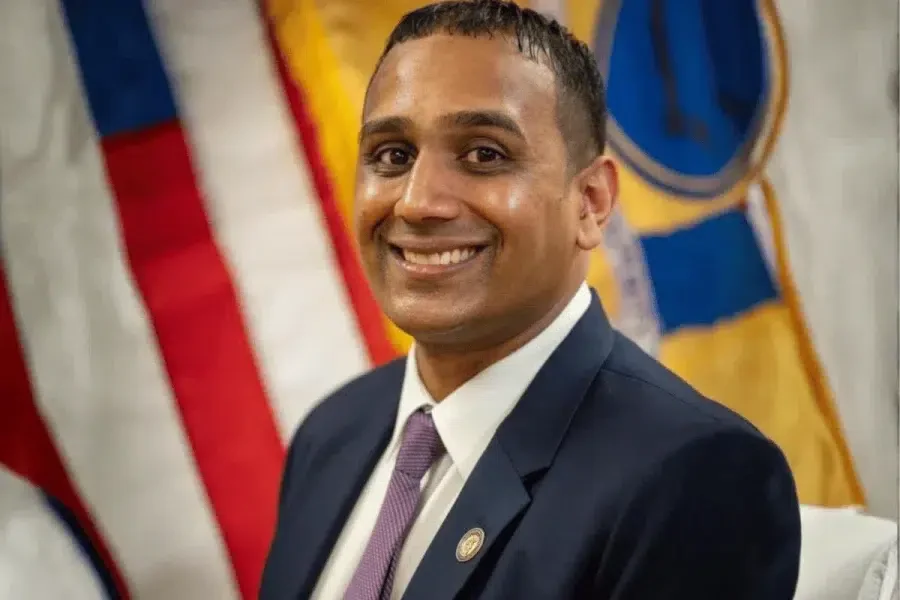
Prospect Park's Councilman Anand Shah has officially resigned from his position following the admission of his involvement in an illegal gambling operation, a situation that has led to severe legal repercussions for him. His resignation took effect on August 28, 2026, with the announcement made public via a letter to the municipal clerk, which he also shared on Facebook.
Shah conveyed the emotional weight of his decision in the letter, addressing what he described as one of the hardest things he has had to write. “After approximately ten years of having the honor and privilege of serving the residents of Prospect Park,” Shah expressed that personal circumstances necessitated his departure from public office.
This resignation comes in the wake of Shah receiving a ten-year prison sentence. His troubles began when he was arrested in April 2025 and subsequently indicted on multiple charges, including serious offenses like racketeering, money laundering, official misconduct, extortion, and tampering with public records.
Initially, Shah maintained his innocence, but he later admitted to his involvement in the illicit gambling operation as reported by the New Jersey Attorney General's Office.
In her statement, Attorney General Jennifer Davenport emphasized that public officials must adhere to the law, noting that Shah's actions undermined that principle. She remarked that his guilty plea serves as a reminder that no one holds immunity under the law.
Anand Shah's Controversial Tenure
The investigation into Shah's activities was part of a larger probe targeting a network involved in unregulated poker games and sports betting. Such operations thrive in secrecy and often flourish in environments where oversight is lacking, raising concerns about broader implications for local governance. His charges positioned him alongside numerous other defendants implicated in the same investigation, highlighting a systemic issue that sometimes permeates local politics.
Following his arrest, Shah spent about seven weeks in custody before facing a judge. His legal representative, Michael P. DeMarco, had initially signaled a commitment to fighting the allegations. Yet, the drastic shift in Shah's stance—to admit guilt—changed the trajectory of the case significantly. This not only reflects Shah's legal strategy but also suggests the weight of the evidence against him was overwhelming.
In his resignation letter, Shah did not dwell on the legal specifics; instead, he broadly referenced the circumstances leading to his decision while extending his apologies to those affected by his actions. “This is not how I ever imagined my years of public service would come to an end.” Shah's acknowledgment of the need to step back indicates an awareness of the personal and professional toll this situation has taken on him. More importantly, it raises questions about accountability in public office.
Shah's letter reflected on his decade of service, as he expressed gratitude to the residents, peers, and community members who supported him. He emphasized that his role as a public servant was more than just a position; it was an essential component of his identity and life. He fondly recalled interactions with locals, community events, and initiatives aimed at improving the lives of children and families, which illustrates the duality of his legacy—a blend of sincere contributions overshadowed by grave misconduct.
He thanked voters for their trust over the years, insisting that being allowed to represent his community was a responsibility he deeply valued. Despite the dark circumstances surrounding his departure, Shah hoped that they wouldn't eclipse his contributions to the council and the progress made during his tenure. This is significant, as it reflects a common sentiment among public figures who fall from grace: the desire to be remembered for their good rather than their failings.
“I hope my current circumstances will not erase the genuine dedication, time, and effort that I gave to Prospect Park throughout approximately ten years of public service,” he wrote. “Serving the Borough of Prospect Park has been an honor, and I will carry the memories and lessons with me always.” The contrast here is jarring. While he wishes to be remembered fondly, the facts of his case undoubtedly complicate that narrative.
Implications for Prospect Park and Beyond
This entire affair offers a startling reflection on the vulnerabilities present in local governance. When elected officials become embroiled in illegal activities, it brings into question not just individual morality, but the systems of checks and balances intended to keep such misconduct at bay. If you're working in this space, you must consider the ramifications for community trust and political engagement. Will constituents feel compelled to participate in an electoral system where trust has been so severely undermined?
The ramifications are not limited to Shah alone. This incident may incite stronger oversight mechanisms, as community leaders begin to reflect on how to prevent similar occurrences in the future. There’s a chance that other officials guilty of misconduct will be more rigorously scrutinized as a result.
In time, the fallout from this scandal could serve as a case study for political ethics training among public officials, highlighting the necessity of transparency and accountability. A shift in local political culture might be underway, as stakeholders reevaluate how to cultivate trust in their representatives. In this sense, the future of Prospect Park’s governance is at a crossroads. The path forward involves not just recovery from this scandal, but a reassessment of the foundational principles that guide public service.
Featured image: Anand Shah via Facebook
Discussion
Sign in to join the discussion.