iOS 27 introduces a new opt-in feature for Siri users, allowing data sharing to refine Siri and Apple's AI models while maintaining strict privacy controls.
Apple has rolled out iOS 27, and with it comes an updated feature for Siri that emphasizes user choice in data sharing. This release, following extensive beta testing phases, marks a significant shift in how users interact with Siri and Apple's broader AI services. The move reflects growing concerns over privacy and data usage, crucial considerations in an age where users are becoming increasingly aware of how their data can influence their digital experiences.
Enhanced User Controls for Siri
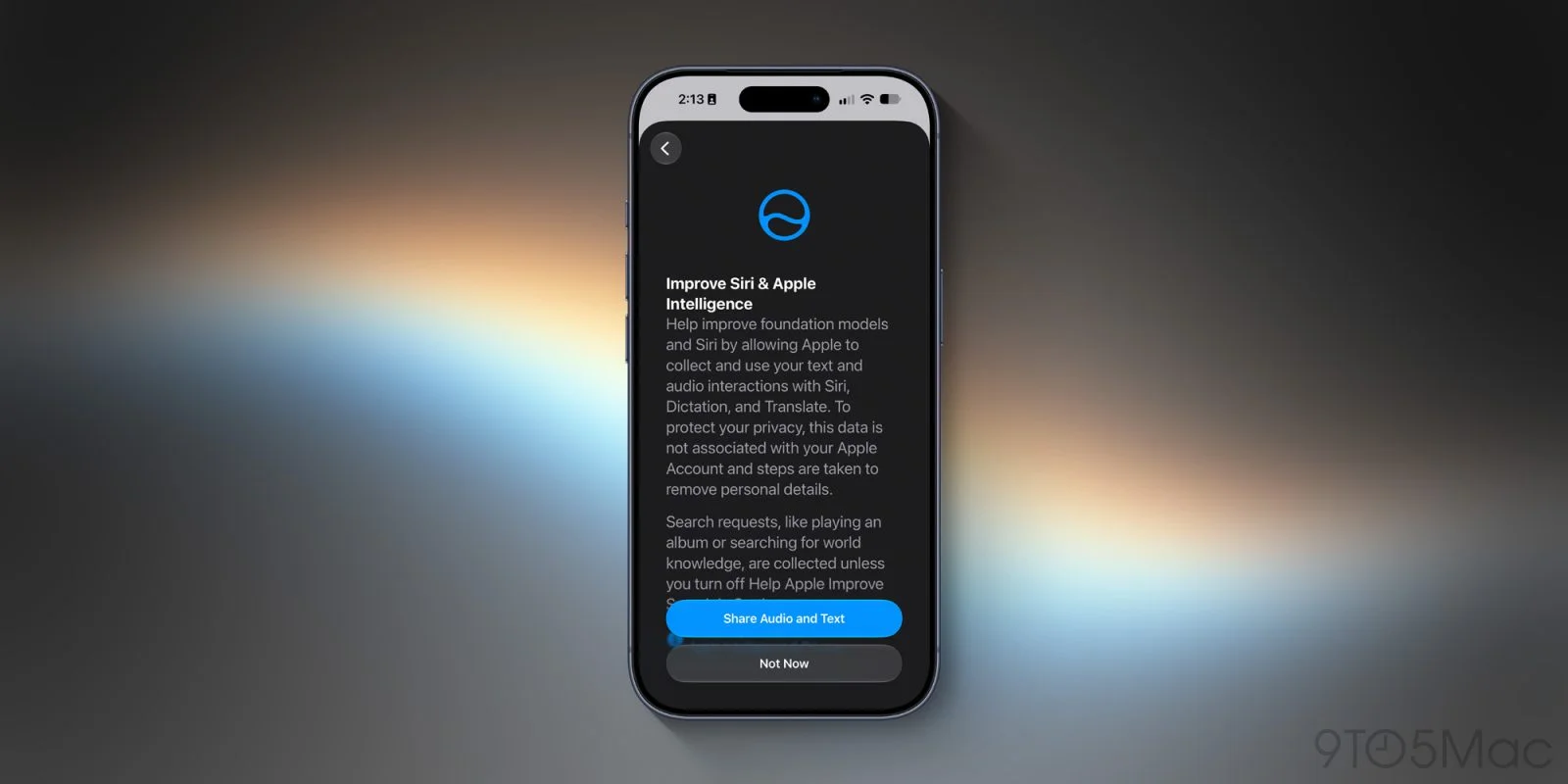
During the initial setup of Siri AI, users will encounter a new prompt that invites them to opt in to enhance Siri and Apple Intelligence. This option follows the previous model where users could choose to assist in improving Siri and Dictation. However, the latest revisions take this a step further by making the choices clearer: when enabling Siri AI, users will see two options: “Share Audio and Text” or “Not Now.” This added clarity is part of Apple’s push to ensure users understand what data will be collected. It's a strategic pivot that speaks volumes about the tech giant's awareness of the contemporary digital environment.
Many users might overlook the implications of these options, assuming they've seen something similar in past iterations. But here's the thing: by presenting users with explicit choices at the outset, Apple is not only reinforcing its commitment to transparency but also actively engaging users in the management of their own data. If you're working in this space, you know that ambiguity around data collection can breed distrust, a sentiment Apple aims to counteract.
Improve Siri & Apple Intelligence
By permitting data collection, users can help Apple refine its foundational models, particularly for Siri, Dictation, and Translate. This aspect is vital; training AI relies heavily on high-quality data. The more accurate and diverse the training data, the better an AI system can perform. Yet, while data gathering processes remain unchanged—audio and transcripts from user interactions—Apple has clarified that this data will now also be utilized for training its foundational models. This newer strategy provides an important opportunity for users to reassess their past consent, especially given the expanded scope of data usage.
This is significant for users who may not have fully understood how their shared data might be applied. The clarity in Apple’s communications about the implications of opting in marks a shift towards more responsible data management practices in tech. Even those who had previously opted in will face this prompt again, allowing them to reconsider their preferences under the enhanced data-sharing framework.
Privacy Measures and Data Anonymity
Importantly, Apple underscores privacy, stating that the data collected is associated with a “random, device-generated identifier” that changes several times an hour. This strategy reduces the risks associated with unintentional data exposure. They stress that personal identifiers, such as Apple accounts or email addresses, are never tied to the shared data. Moreover, this information will not be used for marketing profiles or sold to third parties.
Transparency in how data is handled has never been more important, particularly as high-profile data breaches and scandals have made users wary. Users want assurances regarding how their information is protected. Apple's insistence that the data isn't identifiable is an essential reassurance, but will it be enough? Past experiences with data privacy have left a lingering skepticism among many consumers, which means ongoing vigilance in this area is crucial.
Ongoing Accessibility and User Empowerment
Users can modify their sharing preferences anytime through the following path: Settings > Privacy & Security > Analytics & Improvements > Improve Siri & Apple Intelligence. This flexibility reflects Apple's commitment to user control over data privacy. It's an acknowledgment that users might change their minds about data sharing as they become more informed about privacy implications.
In addition to this update, Apple has released a new support document detailing the settings and related privacy measures applicable across its platforms, ensuring users remain informed about their choices. This is a critical aspect of user empowerment; the more information users have, the better equipped they are to make choices that align with their preferences and comfort levels.
Implications and Future Outlook
As Apple continues to refine its AI integration, these changes signal an evolving relationship between the company and its users—one where privacy and control are paramount. It’s more significant than it looks on the surface; Apple is operating in a market where consumer faith in technology companies is at an all-time low. By prioritizing user choice and transparency in data usage, Apple could carve out a competitive advantage that resonates with privacy-conscious consumers.
That said, the real test will be how effectively Apple can balance data collection for AI enhancement with the burgeoning demands for privacy. The company must continually show that its intentions are not just lip service, but integrated into the fabric of its products and services. Failure to do so could lead to a backlash that blurs the lines between technological advancement and consumer privacy rights.
As we move into this new age of AI-driven interactions, Apple's approach serves as a case study. Other tech giants will undoubtedly watch closely; their strategies may soon follow suit, compelled by user sentiment. The road ahead is one requiring trust, consistency, and a serious commitment to privacy that might ultimately define the next chapter of user-tech relationships.
Stay connected: Follow us on Threads, Bluesky, Instagram, and Mastodon.
Discussion
Sign in to join the discussion.