The Sixth Circuit's decision allows Tennessee and Ohio to enforce gambling laws on Kalshi's sports contracts, raising questions about regulatory authority.
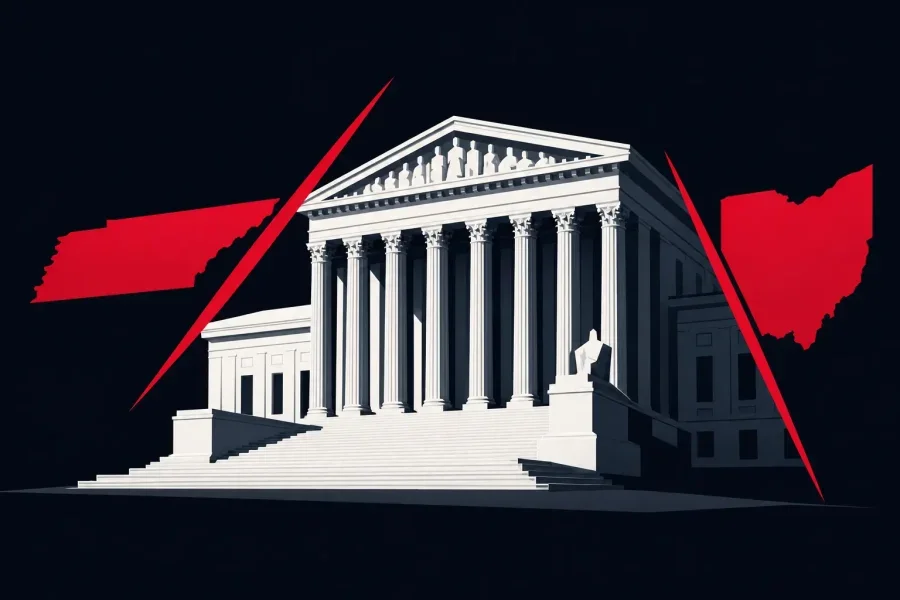
The recent ruling by the U.S. Court of Appeals for the Sixth Circuit marked a significant moment for Kalshi, a trading platform for prediction markets. Issued on September 25, the unanimous decision by a three-judge panel enables Tennessee and Ohio to regulate Kalshi’s sports-event contracts under their gambling laws, effectively dismissing Kalshi's attempt to prevent state enforcement amid ongoing legal disputes. This ruling not only affects Kalshi but could herald broader implications for the prediction market industry as a whole.
Court's Interpretation of the Law
The panel’s evaluation culminated in vacating a previous preliminary injunction granted by a federal judge in Tennessee that had temporarily shielded Kalshi from state enforcement. This decision underscores the court's interpretation that Kalshi's contracts do not align with the definitions established for “swaps” under the Commodity Futures Trading Commission (CFTC). Judge Julia Smith Gibbons articulated that the Commodity Exchange Act fails to preempt state gambling laws, directly impacting Kalshi’s operational landscape within Tennessee and Ohio. This judgment represents more than just a legal technicality; it indicates an increasing reluctance among courts to grant platforms like Kalshi the federal protection they sought.
Kalshi’s situation reflects a growing uncertainty concerning the overlap of state and federal authority over prediction markets. Unlike more traditional trading platforms, prediction markets straddle a line between finance and betting, complicating their regulatory classification. The ruling dismantles the preliminary injunction previously shielding it from Tennessee's regulations while denying Ohio’s attempt to seek protective measures. What this means for Kalshi is a complicated road ahead, where compliance with multiple state laws will become not just a necessity but a significant operational challenge.
Broader Regulatory Confusion
The Sixth Circuit's ruling adds to the ongoing national dialogue, particularly given previous decisions by other appellate courts. Notably, in a September ruling, the Ninth Circuit established that Kalshi’s contracts fell under Nevada's gambling laws, while the Third Circuit in April contradicted this assertion by stating that such contracts are exempt from New Jersey's gambling regulations. This divergence hints at a regulatory environment where states are emboldened to interpret their own laws in ways that could conflict with federal guidelines. The potential for the Supreme Court to intervene and clarify which entity—state or federal—holds regulatory authority over these markets is becoming increasingly likely.
The disputes weave a complex narrative, especially when considering that prediction markets extend beyond just sports to elections and cultural happenings. The Sixth Circuit’s judgment specifically addresses Kalshi's sports contracts, suggesting a focused approach that could limit broader implications for the industry in the future. However, Tennessee and Ohio's readiness to exert their regulatory authority exposes a fundamental tension: they appear motivated not only by a desire for revenue but also by a broader commitment to uphold state gambling regulations. And yet, how this will play out against the backdrop of varying interpretations from other states remains murky.
Anticipating Continued Legal Challenges
Kalshi has indicated it intends to challenge the ruling further, with spokesperson Dani Lever arguing that a patchwork of state-level regulations would lead to chaos. She emphasized that Congress designed a single federal regulator to oversee matters with uniformity across the nation. This perspective highlights the potential for litigation to escalate, as both Kalshi and state governments position themselves in a tug-of-war over jurisdiction and authority. Tennessee's Attorney General Jonathan Skrmetti celebrated the decision as a victory for his state, emphasizing the necessity of maintaining protective measures in sports wagering, which he argues is essential for consumer protection.
Despite the current landscape, where preliminary injunction results in play—Tennessee’s has been vacated while Ohio’s request remains denied—larger regulatory questions linger ominously. The possibility of Supreme Court involvement on the horizon could redefine the jurisdictional boundaries that dictate how prediction markets operate. If you're working in this space, your business strategies may need to pivot quickly as these regulations unfold.
Implications and Future Outlook
The intricate interplay of state and federal regulations continues to be a focal point, making Kalshi's journey emblematic of larger tensions within the evolving gambling and prediction market arenas. The Sixth Circuit's decision not only impacts Kalshi; it sets a precedent that could influence how similar platforms operate across the nation. This ongoing conflict also amplifies the urgency for a cohesive regulatory framework that could provide stability and clarity.
As the conversation progresses, stakeholders in the prediction market industry will need to remain vigilant. If the Supreme Court decides to take on this issue, the implications could reverberate far beyond Kalshi, possibly reshaping the future of how prediction markets are governed. For Kalshi and its competitors, navigating these waters will require strategy, adaptability, and perhaps a hint of luck as the landscape shifts. The stakes couldn’t be higher, and this is just the beginning.
Discussion
Sign in to join the discussion.