This analysis uses data to compare Babe Ruth and Mickey Mantle, exploring their careers in home runs, batting averages, and more.
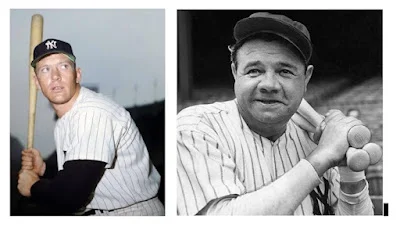
For many fans, the debate over who is the greatest baseball player rages on, with Babe Ruth and Mickey Mantle frequently at the center of discussions. Ruth, often touted as one of the best all-around players, had an impressive career that boasted not just power but versatility as well. Mantle, too, showcased extraordinary talent during his 18 years in Major League Baseball, but his journey was marred by significant challenges due to injuries. This brings us to a complex question: How do their careers truly measure up when we look beyond the surface and into the stats?
Career Statistics Overview
The Sean Lahman baseball dataset, which tracks player statistics back to 1871, provides a rich resource for comparisons between legendary players. Analyzing this data allows for an objective evaluation of their careers, highlighting trends and anomalies. For instance, Ruth played 102 more games than Mantle, accumulating a total of 2,503 games compared to Mantle’s 2,401. This additional playing time certainly contributed to Ruth's higher numbers. When it comes to performance metrics, Ruth’s statistics markedly surpass Mantle’s across nearly every major category, with the sole exception being stolen bases, a fact that speaks volumes about Ruth's distinct playing style.
Babe Ruth’s lifetime batting average stands at a remarkable .342, showcasing not just skill but also an exceptional ability to connect with the ball. This places him just behind legends like Ted Williams and Tris Speaker. In stark contrast, Mantle holds a .298 average. When evaluating offensive output, Ruth's superiority is evident in his 714 home runs versus Mantle's 536. To add to the comparison, Ruth records a staggering 2,217 RBIs, whereas Mantle managed 1,509. This stark disparity poses a provocative question: How might Mantle’s statistics have looked had injuries not plagued his career at pivotal moments?
Factors Influencing Performance
Lineup protection plays a pivotal role in a player's success, directly impacting their on-base opportunities and runs batted in (RBIs). Babe Ruth often batted in front of Lou Gehrig, a powerhouse in his own right, whose presence in the lineup might’ve influenced how pitchers approached Ruth. Mantle enjoyed similar advantages from facing pitchers while Yogi Berra was waiting to bat behind him. Both players had a reputation for drawing walks, which indicates their skill at getting on base, yet it’s likely that pitchers avoided walking them to face their more formidable teammates directly behind them. This nuanced dynamic illustrates how surrounding talent can enhance or hinder individual performance in meaningful ways.
Defensive Metrics
Turning to defensive performance, an analysis must focus solely on appearances in the outfield for a fair comparison. Ruth's outfield career spanned 2,241 games, which surpasses Mantle's 2,019 games. Interestingly, while their outfield putouts are comparable, Ruth’s 204 assists highlight his strong arm – a skill honed from his earlier days as a pitcher. Mantle’s agility in center field allowed him to cover more ground, an invaluable asset for any team. The total assists tell a fuller story of Ruth's capability, even if they trail behind defensive savants like Roberto Clemente. If you're working in this space, consider how legends of the game were often multi-dimensional athletes, impacting both offense and defense in impressive ways.
Even by isolating Ruth's hitting and fielding metrics, the data reflects an outstanding career marked by talent and versatility. His offensive stats tell a compelling story about his ability as both a hitter and a fielder, even without factoring in his success as a pitcher. This multi-faceted skill set is part of what has allowed Ruth to remain a significant figure in baseball lore.
Data Summary
| Category | Mantle | Ruth |
|---|---|---|
| Games | 2401 | 2503 |
| At Bats | 8102 | 8398 |
| Runs | 1677 | 2174 |
| Hits | 2415 | 2873 |
| Doubles | 344 | 506 |
| Triples | 72 | 136 |
| Home Runs | 536 | 714 |
| Batting Average | 0.298 | 0.342 |
| RBIs | 1509 | 2217 |
| Stolen Bases | 153 | 123 |
| Walks | 1733 | 2062 |
| Strikeouts | 1710 | 1330 |
| Outfield Games | 2019 | 2241 |
| Putouts | 4438 | 4444 |
| Assists | 117 | 204 |
Implications and Future Outlook
The arguments about Ruth versus Mantle won't settle anytime soon, but the impact of their careers on the game is clear. Truthfully, this isn't just about stats; it's about storytelling. Babe Ruth's contributions to baseball were monumental, shaping the way the game was played and perceived. While Mantle’s legacy is equally impressive, the statistical evidence suggests he’s got considerable ground to cover. What this means for you, the reader, is that historical context matters. Each player represents different eras, challenges, and expectations.
Final Thoughts
Ultimately, the data supports the assertion that Babe Ruth's contributions to the game as a player are monumental. When comparing Ruth's statistics against those of Mantle, we see Ruth’s legacy as a dominant offensive force that resonates through time. Sure, Mantle had his moments—his speed and base running were impressive. But can they overshadow the sheer breadth of Ruth's impact? That's a question history will always ask.
Discussion
Sign in to join the discussion.