Microsoft plans to consolidate its Copilot tools into a single app, merging functionalities to enhance user experience while addressing concerns around governance.
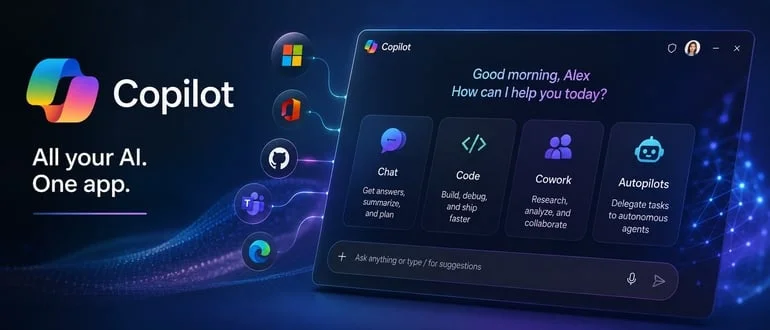
Microsoft is taking a significant step by consolidating its various Copilot applications into a singular platform, a decision confirmed by CEO Satya Nadella during the company’s fiscal Q4 2026 earnings call on July 29. This new "super app" will integrate chat, coding, the Cowork research tool, and Microsoft's autonomous agents, known as Autopilots, creating a unified experience for both business and personal use. Nadella stated, “Copilot is evolving rapidly from chat to Cowork to Autopilots,” hinting at more cohesive functionality ahead. While he outlined the app's major components, specifics about whether this will replace existing standalone Copilot apps or work alongside them remain unclear.
Understanding the Motivation Behind Microsoft's Move
The desire to unify has been brewing at Microsoft for some time, with reports indicating that the initiative has been internally branded as “One Copilot.” The objective is to minimize app switching, enabling users to have a consistent experience whether they’re coding, managing documents, collaborating, or tackling personal tasks. This effort stems from the confusion generated by multiple Copilot offerings, including Microsoft Copilot for consumers and Microsoft 365 Copilot tailored for both consumer and enterprise users. The latter had originated as the encompassing Office app before its rebranding.
Microsoft's user engagement metrics provide further justification for this consolidation. Conversations among users have nearly doubled year-over-year, with weekly engagement now rivaling well-established products like Outlook and Teams. With over 30 million paid Microsoft 365 Copilot subscriptions, consolidating these tools aims to capitalize on this momentum while streamlining offerings.
Mitch Ashley, VP at The Futurum Group, remarked, “Microsoft is claiming the agent control plane at the work surface,” highlighting the importance of integrating Autopilots into a single consumer and commercial app, enhancing identity governance in the process.
The Broader Context: A Race Towards the Super App
The push toward creating a “super app” is not unique to Microsoft. OpenAI has also ventured into this territory, unveiling an app that combines ChatGPT with its Codex tool. However, OpenAI faced its own challenges during the rollout, which Greg Brockman, its president, described as “kind of a mess.” Users initially struggled with a confusing interface that separated the chat experience from work and coding functionalities. This scenario serves as a cautionary tale for Microsoft as it readies its upcoming app.
The industry's fixation on super apps is grounded in a straightforward motivation: the company that consolidates tasks such as chat, coding, and delegating responsibilities under one roof will dominate the interface for enterprise AI interactions. It’s no longer just about launching another AI assistant; the focus is on becoming the centralized platform for all AI-related tasks.
Navigating Governance Challenges
For DevOps and platform teams, the crux of the matter lies not just in a unified interface, but in its implications for agent proliferation and identity management. Merging various functions into one application doesn’t inherently resolve governance issues; instead, it repositions them. As organizations introduce more AI agents—often without robust governance frameworks—risks like “agent sprawl” can escalate. Gartner predicts that by the end of 2026, 40% of enterprise applications will feature task-specific AI agents, a massive leap from under 5% in 2025.
Microsoft is proactive in addressing governance on the identity front through its Entra Agent ID system, aimed at overseeing the entire lifecycle of AI agents from creation to decommissioning. This includes maintaining a comprehensive inventory of agents operating within an organization. As Autopilots function within this singular app that services both personal and commercial users, the implications of credential management and audit trails become more pronounced.
Ashley offered insight into the technical challenges that lie ahead: “Admins will still reconcile licensing, permission scopes, and audit trails across four products that grew up separately. Consolidating the interface is the easy half.” Security experts echo these sentiments, underscoring that organizations often mismanage agent sprawl by failing to treat agents as identity-bearing entities. Each agent requires governance similar to any other identity to manage permissions and ensure ongoing oversight.
What Lies Ahead
Nadella has indicated a launch timeline for this consolidated app, targeted for completion by the end of October. Until Microsoft discloses further details, pressing questions for IT leaders revolve around operational implications: the transferability of licensing and administrative controls from Microsoft 365 Copilot and GitHub Copilot, the default integration of Entra Agent ID with the new Autopilots, and the fate of existing Copilot offerings once the merged application is unveiled.
Microsoft has an opportunity to glean valuable lessons from OpenAI’s rollout and avoid similar pitfalls. Observing how they manage governance alongside branding will be crucial in determining the app's success and usability.
Discussion
Sign in to join the discussion.